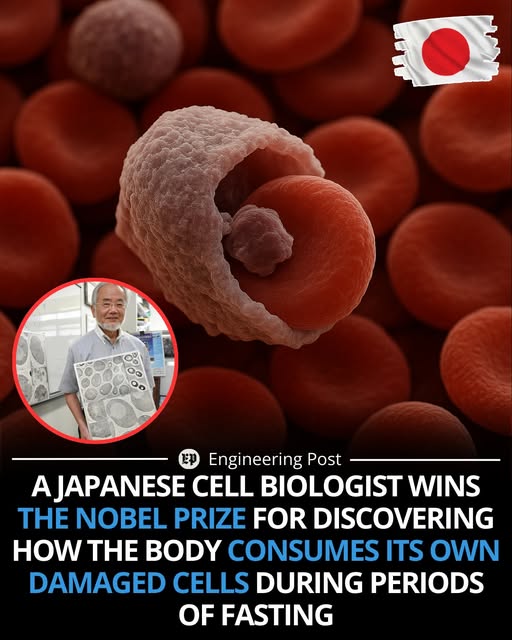
A Japanese scientist has been awarded the Nobel Prize for uncovering one of the body’s most extraordinary survival mechanisms: autophagy — the process where cells consume and recycle their own damaged parts during periods of fasting. This natural “self-cleaning” system keeps cells healthy, provides energy when food is scarce, and protects the body from a wide range of diseases.
Autophagy works like an internal repair crew. When nutrients run low, cells don’t simply slow down — they break down old, faulty components and reuse them as fuel. This breakthrough overturned long-held beliefs that cellular maintenance was passive, revealing instead that the body is actively managing its health at every moment.
The discovery has reshaped modern medicine, offering insight into how autophagy helps prevent cancer, neurodegenerative disorders, infections, and metabolic disease. It also opens the door to therapies that could slow aging, boost longevity, improve organ function, and enhance the benefits of fasting.
This Nobel-winning research shows just how intelligent and adaptable the human body truly is — constantly renewing itself, even in times of scarcity. Autophagy may be one of the keys to
please visit this official website to learn more information about Parkinson’s Disease: symptoms, how to diagnose and treat it.. God help you

