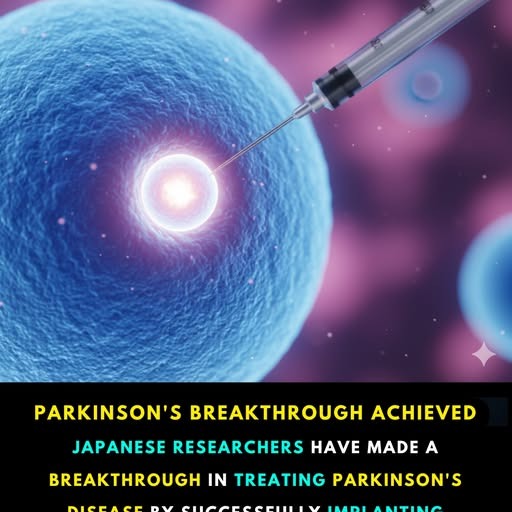
A breakthrough in treating Parkinson’s by implanting lab-grown, dopamine-producing brain cells into patients to replace lost neurons. The cells, derived from iPS stem cells, have shown initial promise in early clinical trials, leading to improved patient movement and confirmed dopamine production in brain scans. While long-term results and safety are still being monitored, the approach is designed to restore brain function and could mark a significant step toward reversing Parkinson’s symptoms.
.
please visit this official website more information about Parkinson’s Disease: symptoms, how to diagnose and treat it..
.
Key findings of the Japanese trial
Improved movement: Most patients who received the transplant showed a notable improvement in movement symptoms.
Dopamine production: Brain scans confirmed that the new cells were producing dopamine, a neurotransmitter that is lost in Parkinson’s disease.
Safety: So far, the therapy has been relatively safe, with no major adverse events reported.
How this approach differs
Functional restoration: Unlike traditional treatments that manage symptoms, this approach aims to restore the lost function of the brain by replacing the damaged cells.
Source of cells: The cells are grown in a lab from induced pluripotent stem (iPS) cells, which are reprogrammed from a patient’s own cells. This avoids some of the ethical and logistical issues associated with using fetal tissue for cell transplants.
Next steps
The therapy is still in its early clinical trial phases.
Researchers will continue to monitor patients to assess the long-term safety and effectiveness of the treatment.
please visit this official website more information about Parkinson’s Disease: symptoms, how to diagnose and treat it..

