When someone hears the words “Parkinson’s disease”, one of the first fears that comes up is: “What will happen to me over time?”
It’s a valid question — and also one that deserves a calm, clear explanation.
The truth is: Parkinson’s progresses differently for every person.
No two journeys look the same.
But the Hoehn & Yahr scale — the most widely used way to describe progression — gives us a simple framework to understand the changes that may happen over the years.
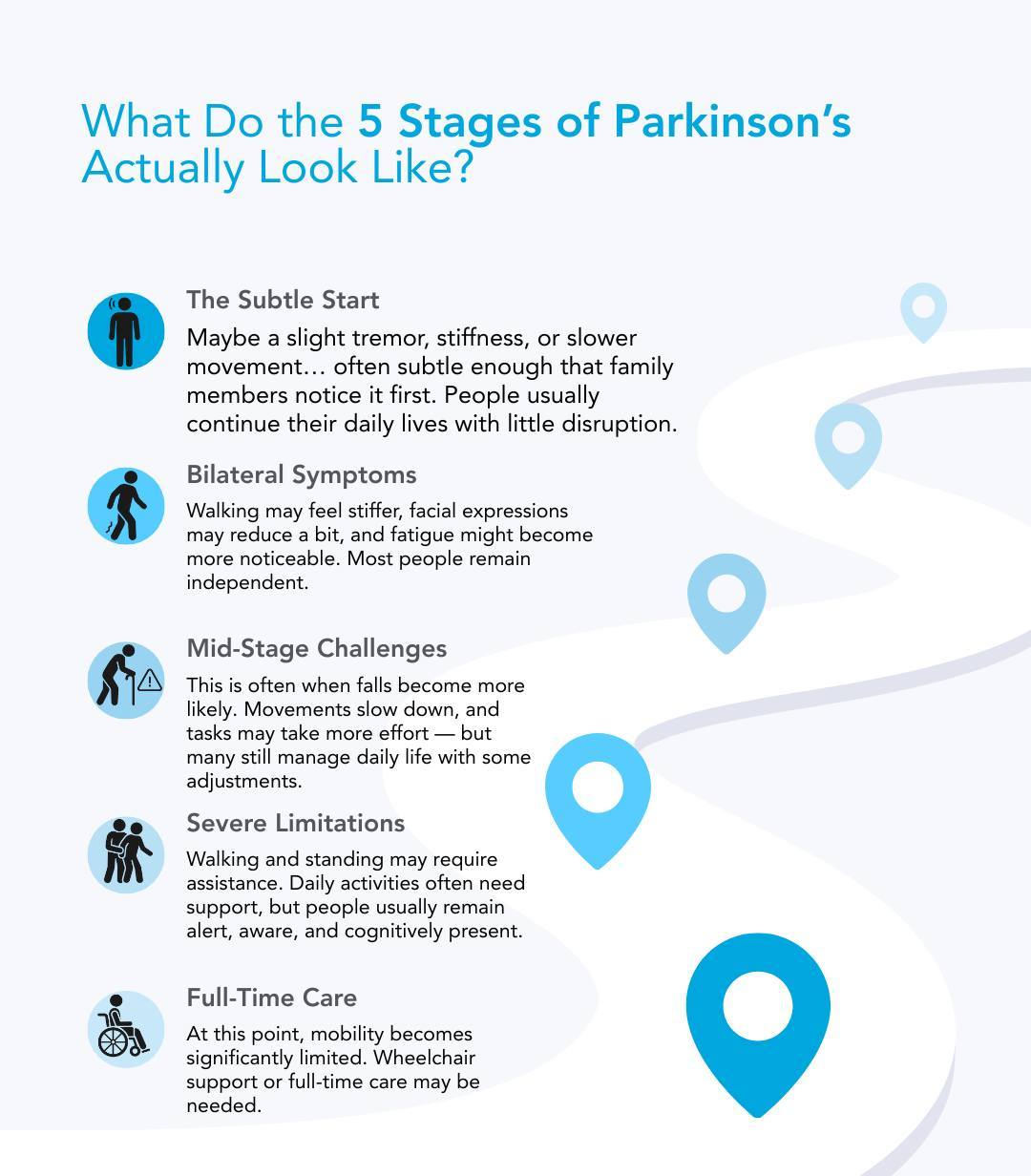
Here’s what the 5 stages of Parkinson’s typically look like:
 Stage 1: Mild symptoms, often on one side
Maybe a slight tremor, stiffness, or slower movement… often subtle enough that family members notice it first.
People usually continue their daily lives with little disruption.
Stage 2: Symptoms appear on both sidesWalking may feel stiffer, facial expressions may reduce a bit, and fatigue might become more noticeable. Most people remain independent.
Stage 3: Balance challenges beginThis is often when falls become more likely. Movements slow down, and tasks may take more effort — but many still manage daily life with some adjustments.
Stage 4: Symptoms become more limitingWalking and standing may require assistance. Daily activities often need support, but people usually remain alert, aware, and cognitively present.
Stage 5: Advanced stageAt this point, mobility becomes significantly limited. Wheelchair support or full-time care may be needed.
 Important:
Parkinson’s progression is not linear, and medication, exercise, physiotherapy, and supportive care can make a real difference in quality of life.
If you or someone you love is on this journey, remember: you don’t walk it alone.
Support, knowledge, and community can make this path softer and more manageable — one step at a time
For more information about Parkinson’s disease (symptoms, diagnosis, and treatment), please visit this official website:

