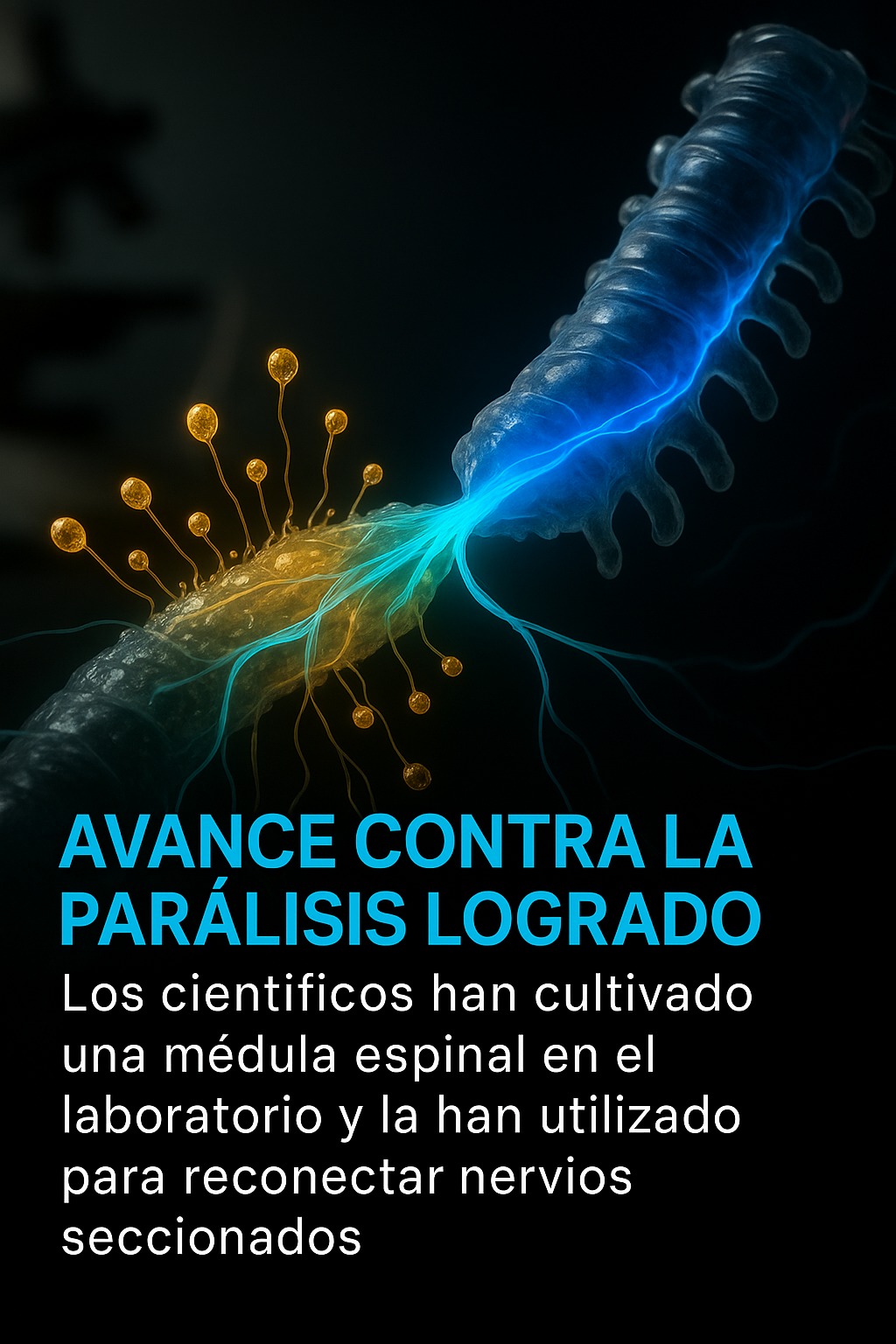
In a medical breakthrough that previously seemed impossible, scientists have managed to grow the spinal cord in the lab and use it to reconnect damaged nerves. Paralyzed patients, who had lost hope of regaining movement, are now regaining their steps, marking a groundbreaking milestone in neuroscience and regenerative medicine.
This lab-grown spinal cord acts as a bridge, allowing damaged nerves to reconnect and restore communication between the brain and the body. Early trials show patients are regaining voluntary movement, indicating that paralysis may not be permanent.
Experts say this discovery could transform the treatment of spinal injuries, offering hope to millions worldwide. It also opens the door to future therapies that could repair other damaged nerve tissues, potentially changing the way physicians approach neurological injuries.
What was once science fiction is now reality, proving the extraordinary power of modern medicine and biotechnology. Patients, families, and medical communities celebrate this transformative breakthrough as the future of paralysis treatment unfolds before our eyes.
For more information on Parkinson’s disease (symptoms, diagnosis and treatment), please visit this official website:

