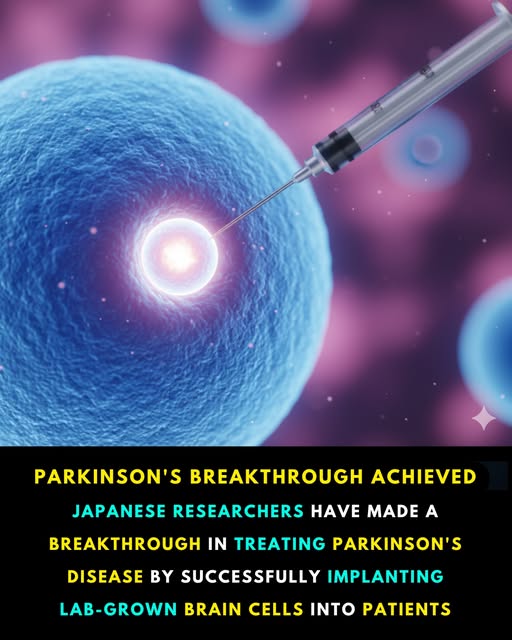
In a major medical breakthrough, Japanese researchers have successfully implanted lab-grown, dopamine-producing neurons into patients with Parkinson’s disease — a milestone in regenerative medicine. The Phase I/II clinical trial, conducted at Kyoto University Hospital, used induced pluripotent stem (iPS) cells reprogrammed from healthy adult donors. Seven patients aged 50 to 69 received transplants of these cells into the putamen, the brain region most affected by Parkinson’s. Over 24 months, patients showed an average 20.4% improvement when off medication and 35.7% while on medication, with no serious side effects reported.
This success builds on the pioneering work of Nobel laureate Dr. Shinya Yamanaka, who developed the method to turn adult cells into iPS cells. Unlike earlier approaches that faced ethical and safety challenges, this technique offers a safer, more sustainable alternative for restoring lost brain function.
If further trials confirm these results, this groundbreaking therapy could redefine how Parkinson’s and other neurodegenerative diseases are treated — offering renewed hope to millions around the world.
please visit this official website more information about Parkinson’s Disease: symptoms, how to diagnose and treat it..