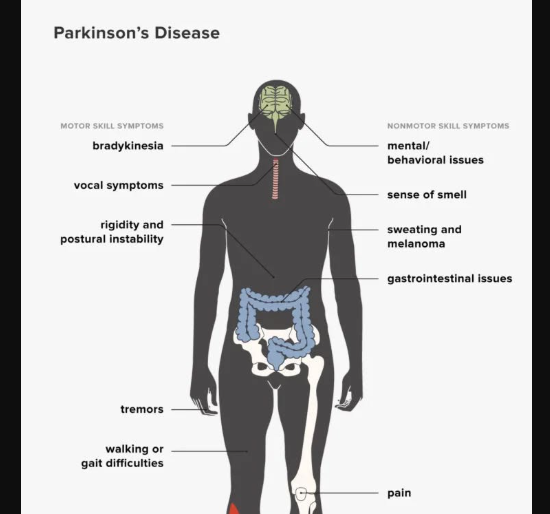
Parkinson’s disease affects the body by causing motor and non-motor symptoms due to the brain’s degeneration of dopamine-producing neurons. This leads to tremors, muscle stiffness, and slowness of movement, as well as non-motor issues like sleep disorders, constipation, depression, and fatigue. Symptoms start slowly and worsen over time, impacting a person’s ability to perform daily tasks, and may include difficulty speaking, balance problems, and cognitive changes in later stages.