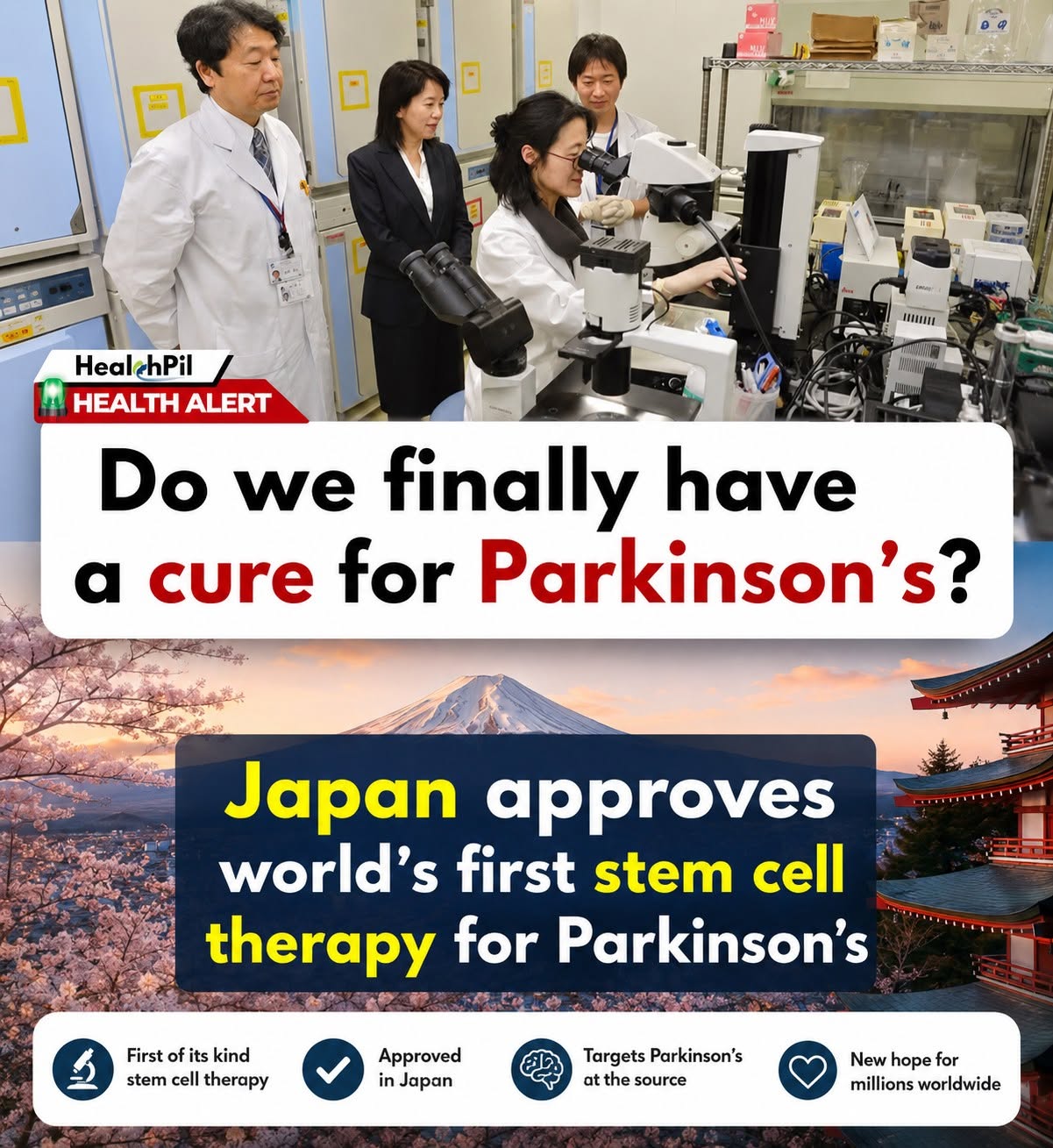
Japan has approved the world’s first stem-cell based treatment for Parkinson’s disease. This is an important step in the field of regenerative medicine, where scientists try to repair or replace damaged cells in the body.
 Parkinson’s disease happens when certain nerve cells in the brain slowly die. These cells normally produce dopamine, a chemical that helps control movement. As these cells are lost, patients develop symptoms like tremors, stiffness, slow movements and difficulty with balance.
 Most of the medicines we currently use help improve symptoms by increasing dopamine levels or mimicking its action. But they do not replace the brain cells that were lost.
 This new treatment tries to do something different.
It is important to understand that this is not a cure yet. Larger studies and longer follow-up will be needed to know how well the treatment works over time. nerve cells. These cells are then transplanted into the patient’s brain with the aim of replacing the damaged neurons. 

In an early clinical study in Japan, a small number of patients with Parkinson’s disease received these transplanted cells and were followed for around two years. The treatment did not show major safety concerns during this period, and some patients showed improvement in their movement symptoms.
Based on these early results, Japan has granted the therapy conditional approval, which means it can be used while more long-term data on safety and effectiveness continues to be collected.
It is important to understand that this is not a cure yet. Larger studies and longer follow-up will be needed to know how well the treatment works over time.
–