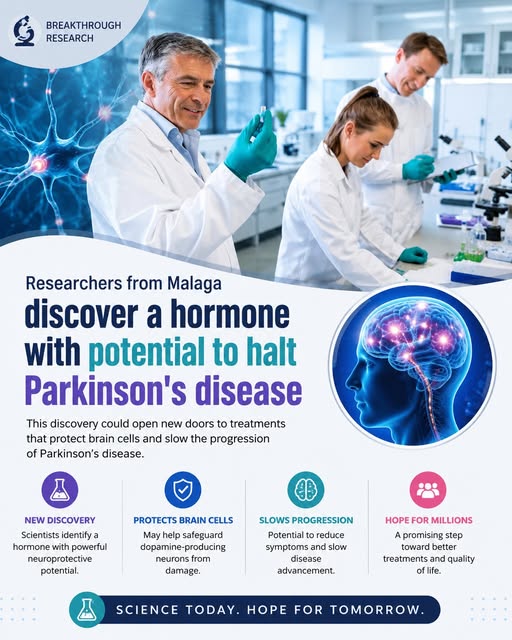
Researchers in Malaga have reported promising findings involving a hormone that may help protect brain cells affected by Parkinson’s disease. Early studies suggest this hormone could reduce harmful processes linked to nerve cell damage and support healthier brain function.
 Scientists are exploring how it may influence inflammation, cellular stress, and the survival of dopamine-producing neurons, which are gradually lost in Parkinson’s disease. While the research is still in its early stages and more clinical testing is needed, the discovery offers hope for future treatments that could slow disease progression.
This breakthrough highlights the ongoing efforts to develop innovative therapies for neurodegenerative disorders.
.
.