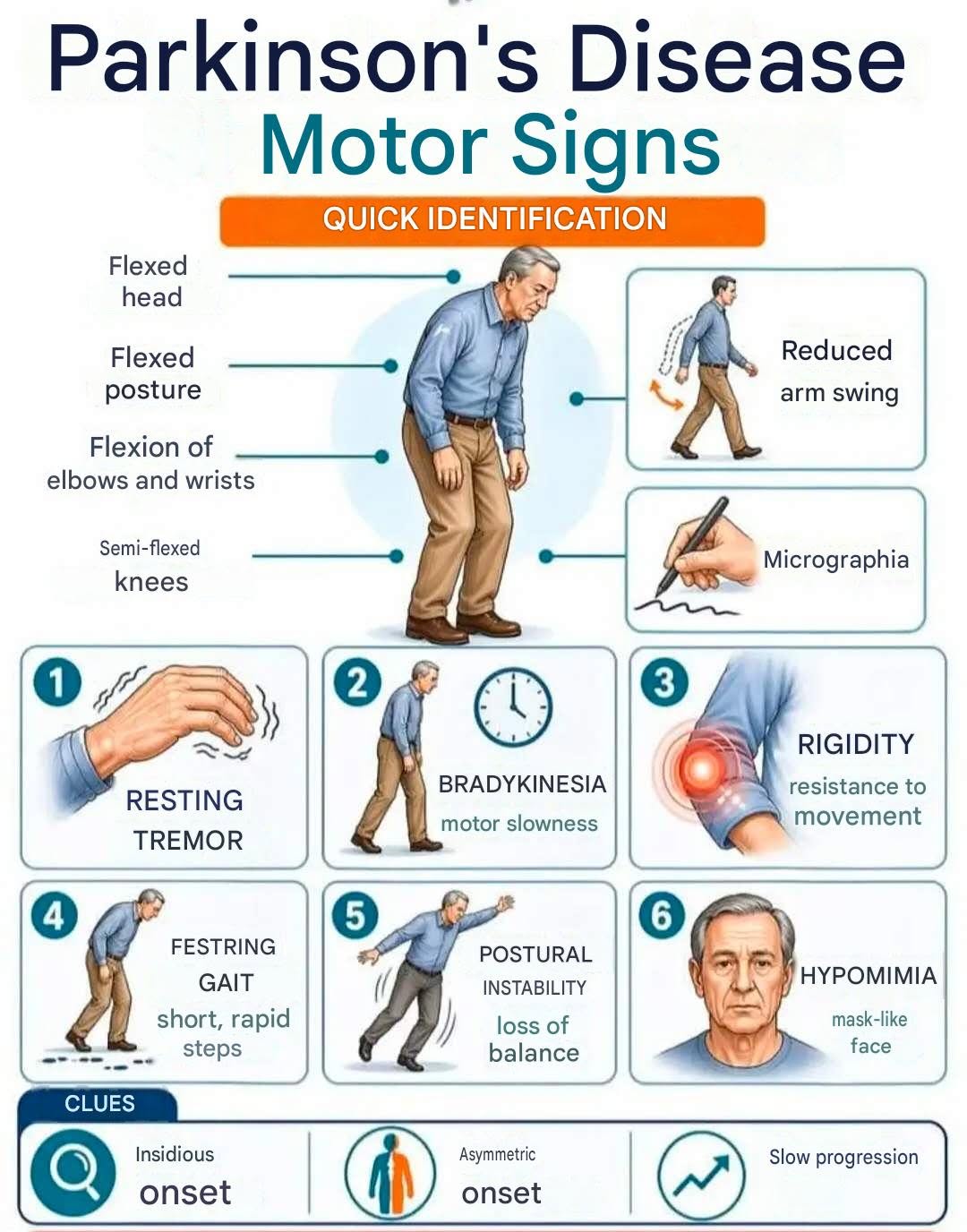
The primary motor signs of Parkinson’s disease are:
Tremor – A rhythmic shaking, often starting in one hand or fingers, usually occurring at rest.
Bradykinesia (slowness of movement) – Movements become slower, making everyday tasks like buttoning a shirt or walking more difficult.
Rigidity – Muscle stiffness that can limit range of motion and cause discomfort or pain.
Postural instability – Problems with balance and coordination, increasing the risk of falls (this typically becomes more prominent in later stages).
Other common motor symptoms include:
Shuffling gait
Reduced arm swing while walking
Freezing of gait (feet feeling “stuck” to the floor)
Difficulty turning or changing direction
Soft or quiet voice (hypophonia)
Small, cramped handwriting (micrographia)
Reduced facial expression (masked face or hypomimia)
Stooped posture
Difficulty with fine motor tasks (e.g., writing, using utensils, buttoning clothes)
Reduced blinking
Drooling due to decreased swallowing frequency
Dystonia (painful muscle contractions or abnormal postures)
Balance problems and increased falls (especially in later stages)
These motor signs are a hallmark of Parkinson’s disease, although many people also experience non-motor symptoms such as constipation, sleep disturbances, loss of smell, depression, anxiety, cognitive changes, and urinary problems, which can significantly affect quality of life.
–
For Free Tips Click Here: 
.
.
.
.