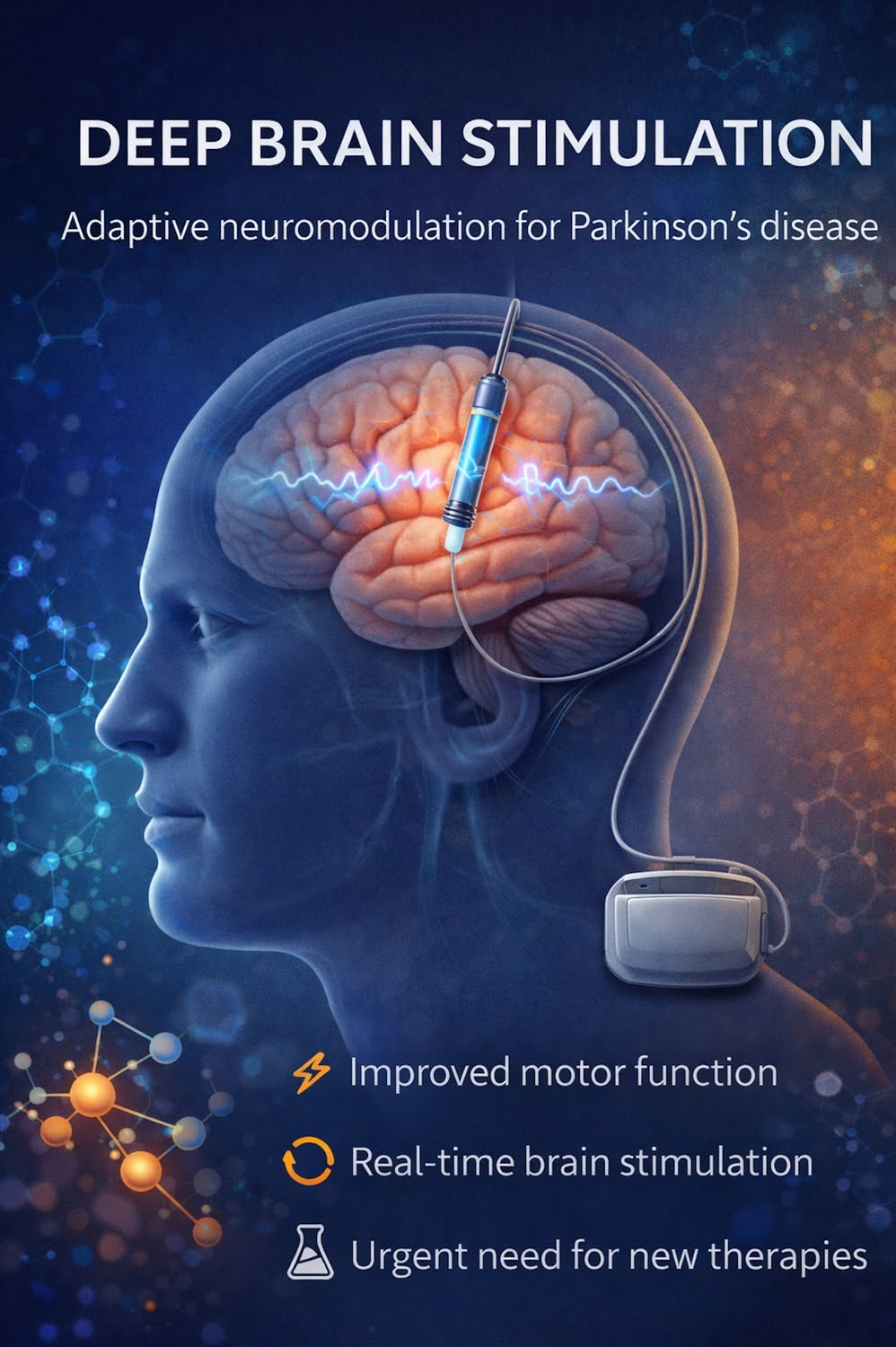
A New Generation of Symptom-Control Technologies
Even within symptomatic treatment, innovation is accelerating.
New delivery systems are being developed to make dopamine therapy more stable, predictable, and convenient.
Recent advances include:
• Extended-release levodopa formulations designed to maintain more consistent drug levels
• Continuous subcutaneous levodopa infusions that deliver medication around the clock
• Apomorphine infusion systems that provide steady dopamine receptor stimulation
These technologies aim to reduce “off” periods and give patients smoother symptom control.
Neuromodulation is also evolving rapidly.
Next-generation adaptive deep brain stimulation systems can now monitor brain activity and adjust stimulation automatically in real time. This closed-loop approach could dramatically improve the precision of DBS therapy.
In parallel, focused ultrasound treatments are emerging as a non-invasive option for selected patients, offering surgical symptom relief without open brain surgery.
Breakthrough Research Targeting Disease Biology!
While improved symptom control is important, the most exciting developments aim to slow or modify the disease itself.
Several areas of research are gaining momentum.
 Biomarkers and Earlier Diagnosis
One of the most important scientific breakthroughs is the emergence of α-synuclein seed amplification assays, which can detect abnormal α-synuclein biology in living patients.
This is significant because α-synuclein aggregation is believed to play a central role in Parkinson’s disease.
Reliable biomarkers could transform clinical trials by allowing researchers to identify patients earlier — possibly even before symptoms appear — when disease-modifying therapies may be more effective.
–
–