Just Comment “THERAPY” and we’ll send you our FREE 19-page e-guide on 12 Proven Actions to manage Parkinson’s Disease!
 Parkinson’s Medications: Pillars of Symptom Management! All you need to know about Physical Therapy Exercise & Balance Training!
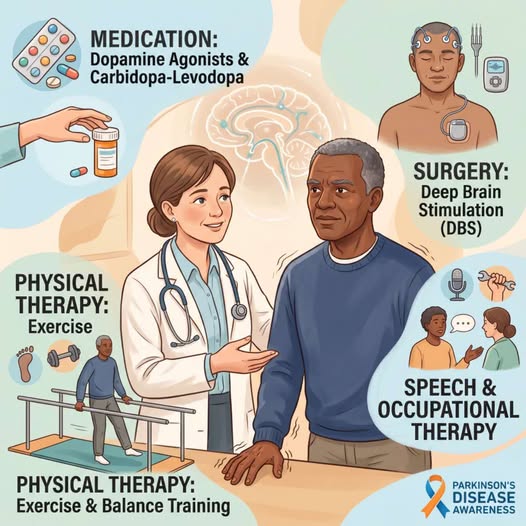
Parkinson’s medication remains the primary line of defense for managing symptoms. These drugs help replenish or mimic dopamine, the brain chemical largely depleted in this condition. Common medication types include:
 – Levodopa (L-Dopa): The gold standard, often paired with carbidopa to enhance effectiveness and reduce side effects.– Dopamine agonists: Mimic dopamine activity without converting to dopamine. Examples include pramipexole and ropinirole.– MAO-B inhibitors: Help prevent dopamine breakdown, extending its availability in the brain.
Each Parkinson’s disease treatment approach using medication comes with risks and potential side effects. Patients and doctors often adjust dosages over time to maintain optimal results.
 ADVANCED TREATMENTS: PARKINSON’S THERAPY AND SURGERY!
For patients whose symptoms advance or become refractory to medications, other Parkinson’s therapy options come into play. These include non-invasive treatments like physical, occupational, and speech therapies, which target motor function, communication, and balance issues.
Visit Official Website: 
Parkinson’s surgery, however, offers a more direct intervention. The most common surgical option is deep brain stimulation (DBS). In DBS, electrodes are implanted in specific brain regions, connected to a device that delivers electrical impulses to regulate abnormal activity. Though not curative, DBS can significantly improve motor symptoms in some individuals.
.
.