Levodopa is still the most powerful tool we have for restoring movement in Parkinson’s especially early on. But a recent review (J Neural Transm, Apr 2025) puts important pieces together about how levodopa’s effects can change as the disease progresses.
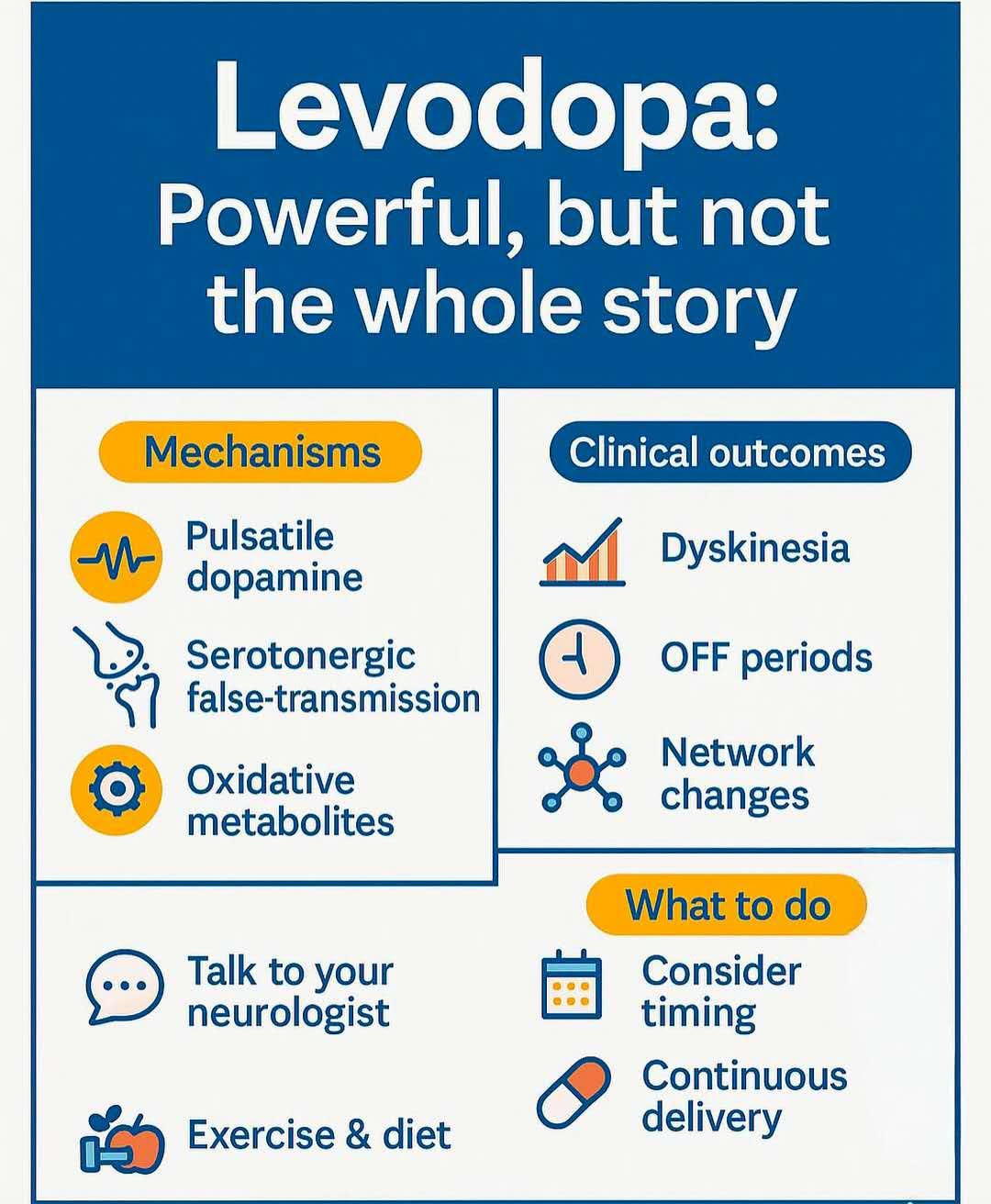
The authors summarize three key mechanisms:
(1) loss of dopaminergic buffering that causes pulsatile extracellular dopamine when levodopa is taken, (2) ectopic conversion of L-DOPA to dopamine in non-dopaminergic neurons (notably serotonergic terminals) creating mismatched signaling, and (3) dopamine’s oxidative metabolites (quinones/ROS) that can produce cellular stress. Together these help explain why long-term complications – dyskinesia, OFF periods, and network-level dysfunction – often
–
 Learn More: https://tinyurl.com/Parkinsons-12-Steps
.
.
.