ONE MIN READ : Korean scientists
just mapped a surprising gut–brain
connection, published in Nature Communications (2025).
(POSTECH, Sungkyunkwan University)
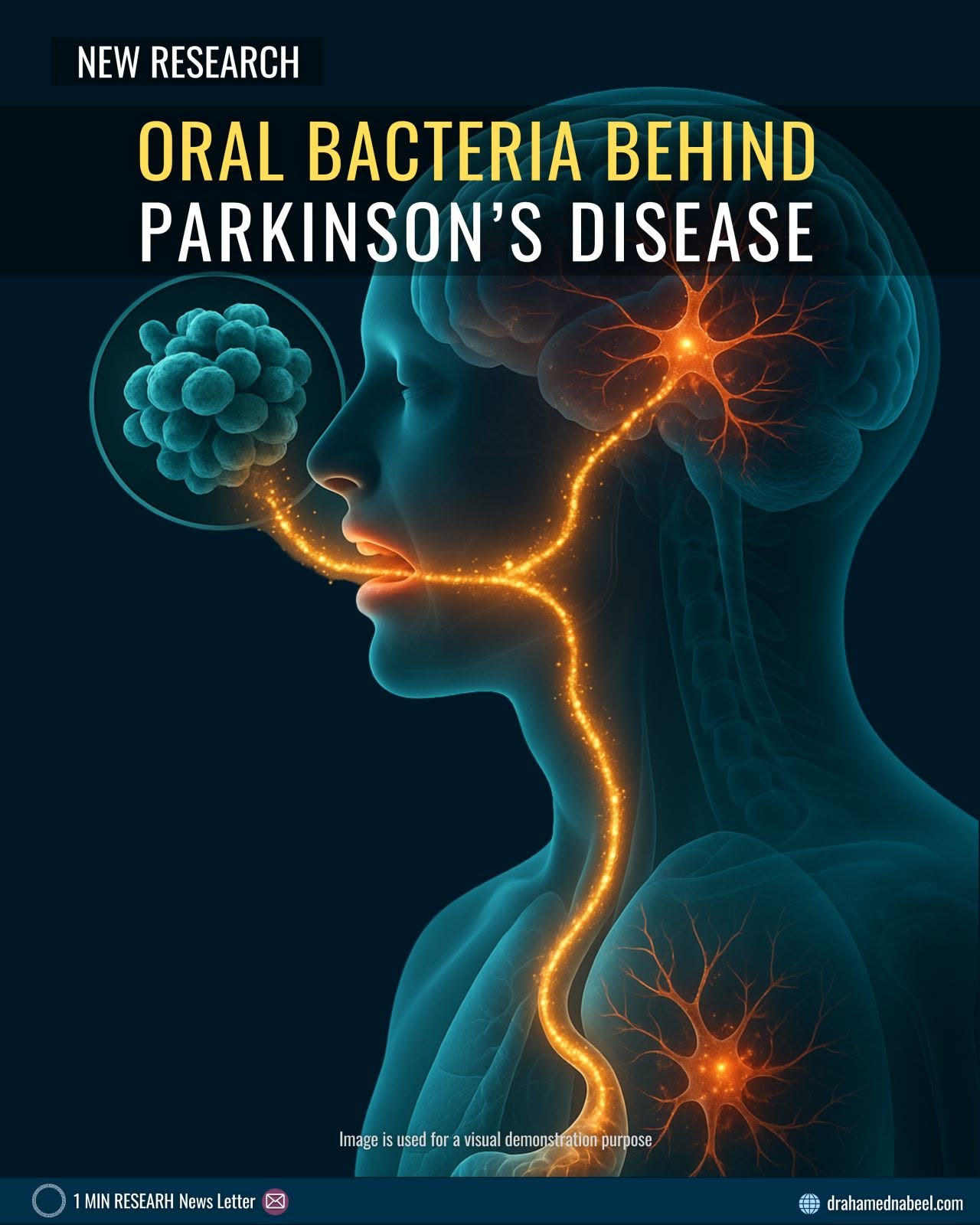
 The culprit? “Streptococcus mutans” -a common oral bacterium usually blamed for dental caries. In Parkinson’s patients, this microbe colonized the gut and produced imidazole propionate (ImP) via the enzyme UrdA. ImP entered circulation and reached the brain, where it activated mTORC1 signaling, driving dopaminergic neuron loss, neuroinflammation, and α-synuclein aggregation.
 Mouse models confirmed the link: introducing S. mutans (or engineered E. coli producing ImP) triggered motor deficits. Blocking mTORC1 reversed these changes.
 Why this matters:
 Provides a direct oral-gut-brain microbial pathway in Parkinson’s. Shifts attention to oral health as a modifiable risk factor. Opens new therapeutic doors: microbiome modulation, metabolite inhibitors. For clinicians, this means we may one day screen microbial metabolites like ImP as early biomarkers – and intervene before neuronal loss becomes irreversible.
The mouth, gut, and brain are more connected than we thought.
Comment “1 MIN RESEARCH” to get latest research updates & summary in your inbox.
–
–
Get Free Access Here: https://tinyurl.com/Parkinsons-Health