Parkinson’s Breakthrough: Scientists Identify Molecular Trigger of Neuron Damage!
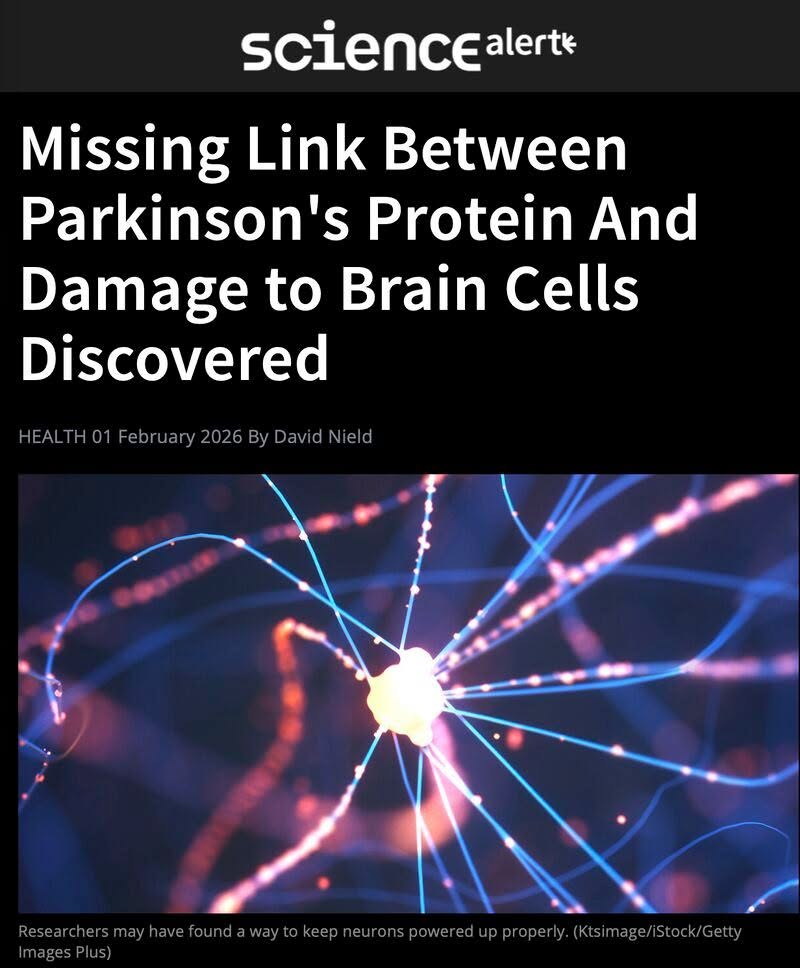
 Researchers at Case Western Reserve University School of Medicine have identified a critical molecular interaction that helps explain how toxic protein buildup in Parkinson’s disease leads to brain cell damage. The study connects two long-suspected contributors—alpha-synuclein and mitochondrial dysfunction—into a single, actionable mechanism.
 The Missing Link!
Alpha-synuclein toxicity
Parkinson’s disease is marked by abnormal clumps of alpha-synuclein proteins that accumulate in neurons.
Mitochondrial weakness
The disease is also associated with impaired mitochondria, the cellular structures responsible for producing energy.
New connection discovered
The research shows that alpha-synuclein binds directly to an enzyme called ClpP, which regulates mitochondrial waste removal.
Functional disruption
This binding interferes with mitochondrial function, reducing energy production and contributing to the decline in dopamine-producing neurons.
A Potential Therapeutic Strategy
Decoy protein design
Scientists engineered a short protein fragment called CS2 to act as a decoy.
Protective mechanism
CS2 diverts alpha-synuclein away from ClpP, preventing mitochondrial damage.
Preclinical results
In laboratory-grown neurons, human brain tissue samples, and mouse models, CS2 reduced inflammation and improved motor and cognitive function.
Root-cause targeting
Researchers emphasize that this strategy addresses a molecular driver of disease rather than merely alleviating symptoms.
Timeline and Caution
Clinical pathway
Human trials are estimated to be at least five years away, pending safety and efficacy validation.
Biological complexity
Because mitochondrial pathways are fundamental to many cellular processes, unintended effects must be carefully studied.
 For Free Tips Visit: https://tinyurl.com/Parkinsons-Health Why It Matters!
Parkinson’s is a multifactorial and progressive neurodegenerative disorder, making it difficult to isolate cause from consequence. By identifying a precise biochemical interaction that damages neurons and demonstrating a way to interrupt it, this research provides both mechanistic clarity and therapeutic direction. If validated in humans, mitochondria-targeted strategies like CS2 could redefine treatment—shifting from symptom management toward modifying disease progression itself.
–
–