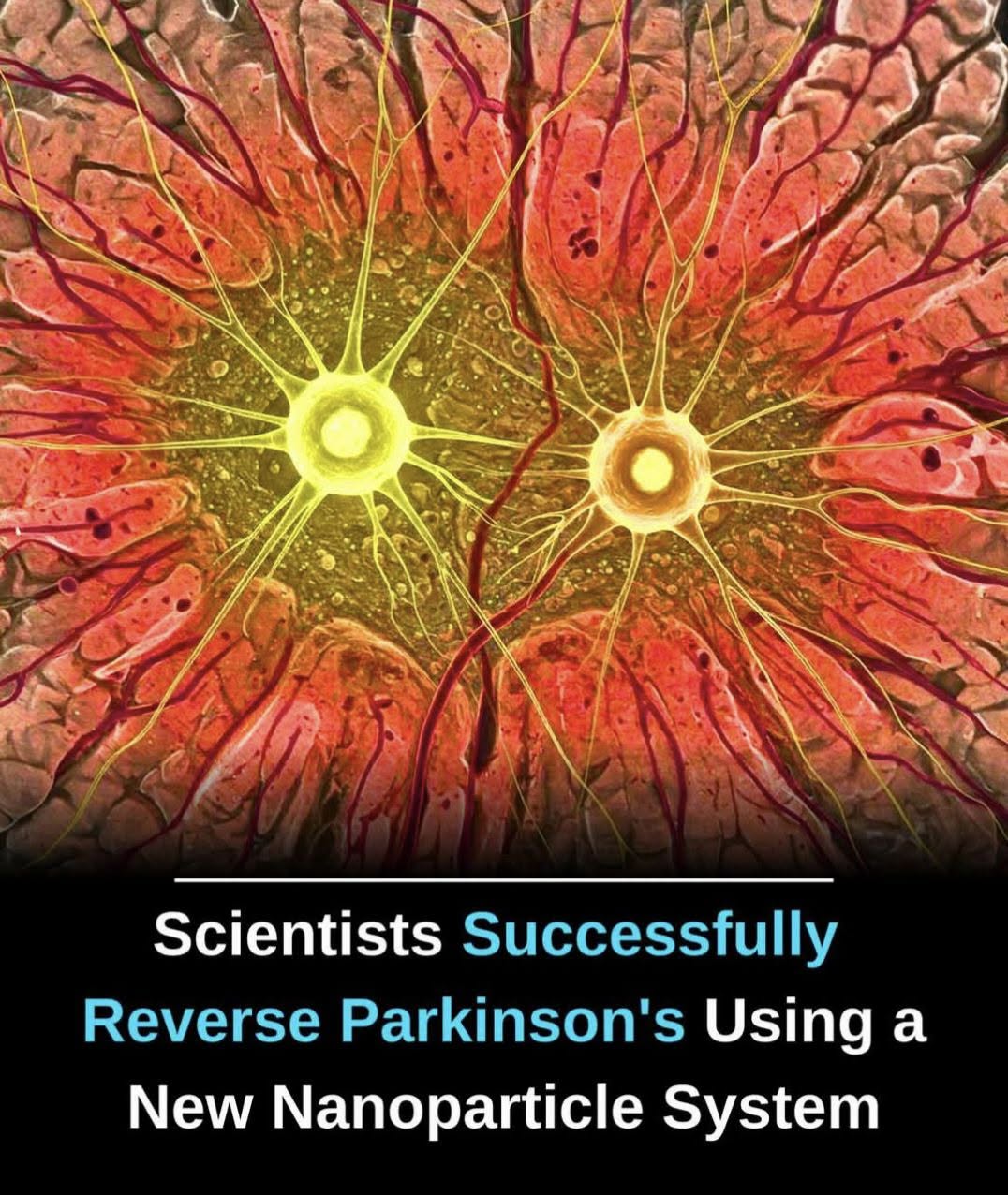
Scientists Successfully Reverse Parkinson’s Using a New Nanoparticle System
Scientists have made a promising advance in Parkinson’s disease research by using nanoparticles to repair brain damage caused by the condition.
Parkinson’s disease, a neurodegenerative disorder affecting millions worldwide, is driven by the buildup of a protein called alpha-synuclein in the brain. This accumulation damages dopamine-producing neurons, leading to the characteristic motor issues associated with the disease.
The new technique uses gold nanoparticles coated with antibodies and peptides specifically engineered to seek out and dissolve these toxic protein clumps. In recent experiments, this method was tested successfully on mice, raising hopes for future applications in humans.
Here’s how it works: the nanoparticles are directed to the brain where they attach to affected dopamine neurons. A beam of near-infrared light, applied externally through the skull, activates the particles, converting light energy into heat. This mild heating triggers natural cell repair mechanisms and releases therapeutic peptides that break down harmful protein tangles. As a result, damaged neurons begin to recover and restore normal dopamine production.
Unlike existing treatments that rely on dopamine-enhancing drugs—often with significant side effects—this approach addresses the underlying cause of the disease. It revives the brain’s own dopamine production capability without the need for ongoing medication.
Though the treatment is still in the experimental stage, limited to mice and lab-grown cells, the results have been remarkable. Mice showed notable recovery from Parkinson’s-like symptoms with no apparent side effects. The system is also non-invasive after initial delivery, thanks to its wireless activation by light.
While human trials are still on the horizon, this proof-of-concept offers a hopeful glimpse into a future with more effective and less invasive treatment options for Parkinson’s.